

How to Read a Rasi Chart in Vedic Astrology: A Beginner's Guide
Your Rasi chart is the blueprint of your life. Learn to decode its houses, planets, and signs to gain clarity on your destiny and make informed decisions.
Your Rasi chart (also called the D1 chart) is the most important chart in Vedic astrology. It shows the position of planets at your birth and forms the foundation for all other divisional charts. If you've ever wondered how to read a Rasi chart, this guide will walk you through the basics, the deeper logic, and how to apply it to real life.
What Does a Rasi Chart Actually Show?
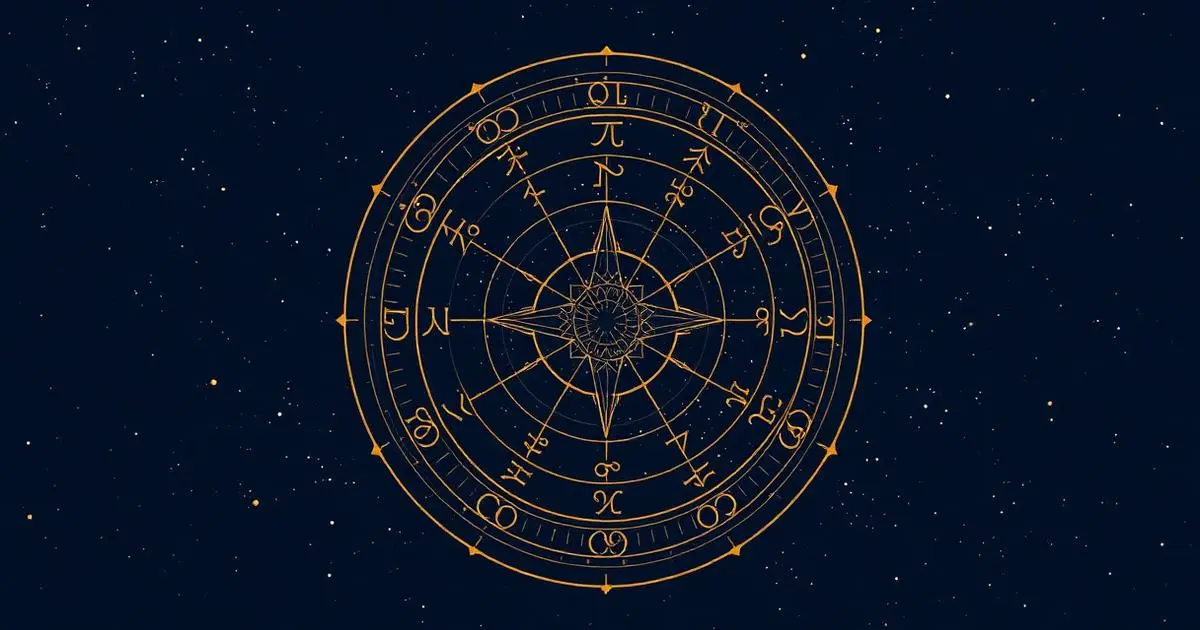
In simple terms, your Rasi chart is a snapshot of the sky at the moment you were born. It is divided into 12 houses (bhavas) and 12 zodiac signs (rashis). The rising sign (Lagna) determines the first house, and each subsequent house follows in order. The planets are placed in the chart based on their actual positions at birth.
But the chart isn't just a static map-it's a dynamic tool. It reveals your personality, strengths, challenges, and the timing of key life events. For example, the 10th house shows your career, the 7th house your marriage and partnerships, and the 4th house your home and inner peace. The condition of these houses, their lords, and the planets placed there tell a detailed story.
Consider this: if you have Jupiter in the 10th house, you might have a career in teaching, law, or finance. But if Jupiter is afflicted by Saturn, there could be delays or obstacles. The chart doesn't guarantee outcomes; it shows tendencies and potentials.
How Can I Interpret My Own Rasi Chart Step by Step?
Reading your Rasi chart can be overwhelming at first, but breaking it down makes it manageable. Here's a simple step-by-step approach:
- Find your Lagna (Ascendant): This is the sign on the eastern horizon at birth. It sets the entire chart. For example, if your Lagna is Aries, you are an Aries ascendant, and your 1st house is Aries.
- Note the planets in each house: Look at which planets occupy which houses. Pay special attention to the houses that are well-placed (kendra, trikona) and those that are challenging (dusthana).
- Examine the house lords: The planet that rules the sign on a house's cusp is the house lord. For instance, if your 7th house is Taurus, Venus is the 7th lord. The strength and position of Venus will indicate the quality of your marriage.
- Look at aspects: Planets aspect other houses and planets. For example, Jupiter aspects the 5th, 7th, and 9th from itself. These aspects modify the houses they touch.
- Consider the Moon sign and Nakshatra: The Moon sign is your mind, and your Nakshatra (lunar mansion) adds subtle details to your personality and timing.
For instance, if you have Sun in the 10th house in Leo, you are likely to shine in your career, perhaps in leadership or government. But if Sun is in the 8th house, your career may involve research, occult sciences, or sudden changes.
What Are the Key Houses and Their Lords in a Rasi Chart?
Each house represents a life area. Here's a quick overview:
| House | Life Area | Significator (Karaka) |
|---|---|---|
| 1st | Self, body, personality | Sun (Atmakaraka) |
| 2nd | Wealth, family, speech | Jupiter |
| 3rd | Courage, siblings, communication | Mars |
| 4th | Home, mother, comfort | Moon |
| 5th | Intelligence, children, past karma | Jupiter |
| 6th | Enemies, disease, service | Mars |
| 7th | Marriage, partnerships | Venus |
| 8th | Longevity, transformation, occult | Saturn |
| 9th | Luck, dharma, higher learning | Jupiter |
| 10th | Career, karma, status | Saturn |
| 11th | Gains, networks, aspirations | Jupiter |
| 12th | Losses, moksha, foreign lands | Saturn |
The house lord's placement, aspects, and strength are crucial. For example, if the 10th lord is in the 6th house, you might face service-related struggles or work in healthcare. If it's in the 11th, you may earn well through a network of friends.
How Do Planets and Aspects Modify the Rasi Chart?
Planets are not just actors; they interact. Each planet has its own nature. Jupiter expands, Saturn contracts, Mars energizes, Venus beautifies. When they occupy a house, they color its issues. Aspects add another layer-for example, Saturn's aspect on the 7th house can delay marriage or bring a mature spouse.
Consider a chart with Rahu in the 7th house. Rahu is a shadow planet that brings obsession and unconventionality. This might indicate a foreign spouse or an unusual marriage. But Rahu's influence is not purely negative; it can also bring material success in partnerships.
Divisional charts like the Navamsa (D9) are used to fine-tune predictions, but the Rasi chart remains the base. For instance, if your Rasi chart has Jupiter in the 7th house, your marriage may be harmonious, but the D9 can show whether the spouse will be supportive or not.
What Is the Role of Nakshatras and Dashas in a Rasi Chart?
Each planet is placed in a Nakshatra (lunar mansion), which refines its expression. For example, Mars in Ashwini Nakshatra is impulsive and fast-acting, while Mars in Bharani is more creative but stubborn. Nakshatras also govern the Vimshottari dasha-the planetary period system that tells you when events are likely to happen.
Your Moon's Nakshatra determines your dasha sequence. If your Moon is in Pushya Nakshatra, you start your life with Saturn's dasha, which might bring early responsibilities. Dashas activate the houses and planets in your chart, bringing results during their periods. For example, Venus dasha can bring marriage, luxury, or creative projects, depending on Venus's position.
Thus, reading a Rasi chart isn't static-it also involves timing. A well-placed Jupiter in the chart doesn't guarantee luck all the time; it fructifies during Jupiter's dasha or antardasha.
How Can I Use My Rasi Chart for Practical Life Decisions?
Your Rasi chart can guide you in career, relationships, health, and even financial planning. For instance, if your 10th lord is strong, you'll succeed in a conventional career. If your 7th lord is afflicted, you might benefit from delaying marriage until after 28. The chart isn't fatalistic; it's a tool for awareness.
Career and Wealth
Look at the 10th house, its lord, and the 11th house for gains. If the 10th lord is in a kendra (1,4,7,10) and well-aspected, you'll rise in life. If it's in a dusthana (6,8,12), you may need to work harder or switch fields. The 2nd and 11th houses show wealth. Jupiter and Venus in these houses can make you prosperous.
Marriage and Relationships
The 7th house and its lord, Venus for men and Jupiter for women, and the 2nd house for family life are key. If the 7th lord is in the 12th house, you might marry a foreigner or live abroad. If Saturn aspects the 7th house, marriage may be delayed. But these are just tendencies-you can choose to marry later and make it work.
Health and Well-being
The 1st house and its lord, the 6th house for disease, and the Moon for mental health are important. If the 1st lord is weak, you might have a delicate constitution. If the 6th house is afflicted, you should pay attention to your health. But remedies like yoga and meditation can mitigate these influences.
What Remedies Can Strengthen a Weak Rasi Chart?
Vedic astrology offers remedies to balance planetary influences. These are not magic-they are psychological and spiritual tools.
- Gemstones: Wear a gemstone associated with your strongest planet or your Lagna lord. For example, a blue sapphire for Saturn, but only if Saturn is well-placed for you. Always consult an astrologer.
- Mantras: Chant specific mantras for weak planets. For example, the Aditya Hridaya Stotra for the Sun, or the Shani Chalisa for Saturn. Regular chanting can calm negative influences.
- Charity: Donate items related to the afflicted planet. For Saturn, donate black sesame seeds or iron on Saturdays. For Mars, donate red lentils on Tuesdays.
- Yoga and Meditation: Strengthen your mind and body. A strong mind can navigate any planetary challenge.
- Lifestyle changes: If your 6th house is afflicted, adopt a healthy diet and routine. If your 7th house is weak, work on communication and compromise in relationships.
Frequently Asked Questions
What is the difference between Rasi chart and Navamsa chart?
The Rasi chart (D1) shows your overall life, while the Navamsa (D9) is the divisional chart for the 9th house, which is the chart of your inner self, marriage, and spiritual growth. The D9 is especially important for predicting marriage and the spouse's nature. A strong D9 can mitigate a weak D1 in some matters.
How do I find my Lagna or ascendant?
Your Lagna is the zodiac sign that was rising on the eastern horizon at your exact birth time and place. You can calculate it using your birth details in any Vedic astrology software or website. The Lagna degree and its Nakshatra are also important.
Can a malefic planet in the 10th house ruin my career?
Not necessarily. Malefic planets like Saturn and Mars can bring discipline and drive if well-placed. For example, Saturn in the 10th house can make you a hard worker and a leader, though you may face early struggles. The house lord's strength and aspects matter more.
How often should I check my Rasi chart?
You don't need to check it daily. However, you should review it during major life decisions like marriage, career changes, or buying property. Also, planetary transits (like Saturn's return at age 29) can activate your chart, so it's helpful to know your chart during those times.
Are there any doshas in my Rasi chart that I should worry about?
Common doshas include Mangal dosha (Mars in 1,2,4,7,8,12) and Kaal Sarp dosha (all planets between Rahu and Ketu). These are not curses but indicators of challenges. Remedies like gemstones, mantras, and rituals can reduce their effects. Consult a knowledgeable astrologer for a personalized analysis.
Can my Rasi chart change?
No, your Rasi chart is fixed at birth. But its effects change as planets transit. For example, when Jupiter transits your 7th house, you may feel more harmony in relationships. So while the blueprint is fixed, the weather changes.
Final Thoughts
Your Rasi chart is a profound tool for self-understanding. It doesn't dictate your fate but illuminates your tendencies, strengths, and challenges. By learning to read it, you can make more informed choices, align with your natural gifts, and navigate difficult periods with grace. Start with your Lagna, then explore each house and planet. The more you study, the more clarity you'll gain. And remember, astrology is not a replacement for free will-it's a guide. Use it to empower yourself, not to feel limited.
Related reading
- Chathurthamsa Chart in Vedic Astrology, Property, Home & Bhagya Answer
- Suitable Colour for My Horoscope, Vedic Astrology Answer
- Will I Be Respected by Others? Vedic Astrology Answer
- Vedic Astrology Personality Analysis: What Your Birth Chart Reveals About You
- Neutral Planets in Your Birth Chart, Vedic Astrology Answer
- What Is My Tithi? How Your Lunar Day Shapes Emotions and Relationships, Vedic Astrology Answer
Learn more about AI astrology and how Vedic astrology AI reads a full birth chart.
Related reading
- Chathurthamsa Chart in Vedic Astrology, Property, Home & Bhagya Answer
- Neutral Planets in Your Birth Chart, Vedic Astrology Answer
- Suitable Colour for My Horoscope, Vedic Astrology Answer
- Vedic Astrology Personality Analysis: What Your Birth Chart Reveals About You
- What Is My Tithi? How Your Lunar Day Shapes Emotions and Relationships, Vedic Astrology Answer
- Will I Be Respected by Others? Vedic Astrology Answer