
Astrology AI: How AI Reads Your Birth Chart
If you’ve ever wondered whether an AI can actually read your Vedic birth chart, the short answer is yes-but the longer, more honest answer is that it does so by combining precise m
If you’ve ever wondered whether an AI can actually read your Vedic birth chart, the short answer is yes-but the longer, more honest answer is that it does so by combining precise mathematics with classical rules, not by intuition or guesswork. Astrology AI works by turning your birth details into a structured data set, then applying the same ancient principles a human astrologer would use, but at a speed and scale no human can match. In essence, it doesn’t “feel” your chart; it calculates it, cross-references it, and interprets it according to the rules of Jyotisha, the traditional Vedic system that dates back thousands of years.
To understand what’s really happening under the hood, it helps to break the process into concrete steps. When you enter your birth date, time, and place into a platform like RetroGrade, the AI first does something called an ephemeris calculation. This is the same astronomical math used by planetary almanacs-it computes the exact position of the Sun, Moon, and planets at the moment of your birth, down to the arc-second. This isn’t speculative; it’s based on the actual orbital mechanics of the solar system, using the sidereal zodiac that Vedic astrology relies on, which is different from the tropical zodiac used in Western sun-sign astrology.
What happens after the planets are plotted in your chart?
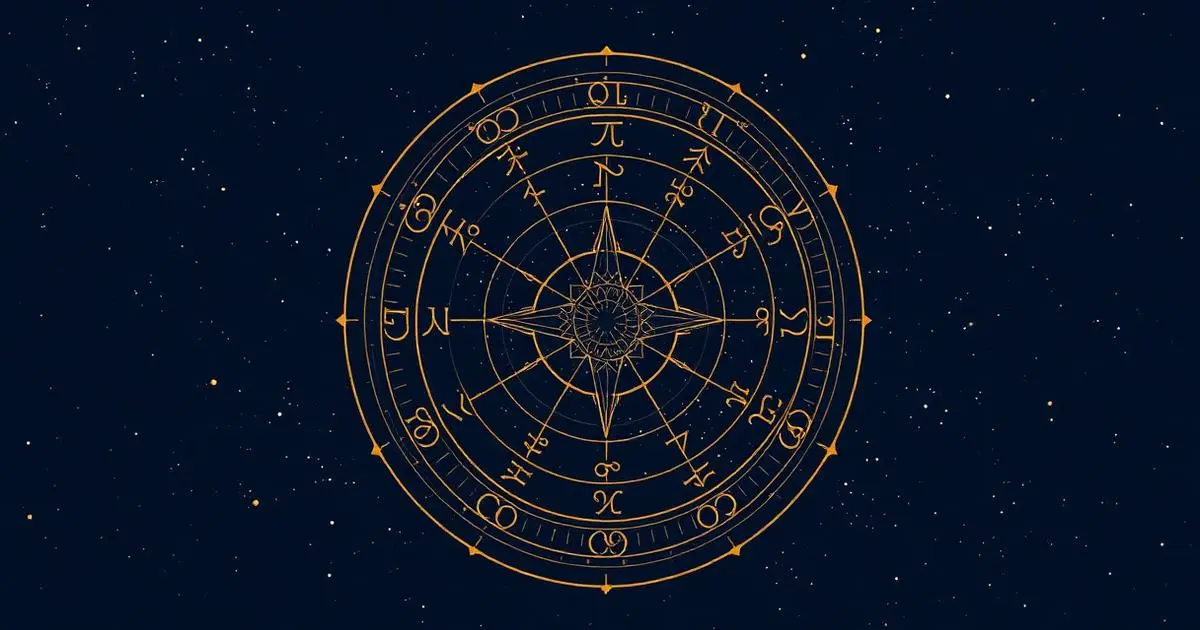
Once the planetary longitudes are known, the AI determines your ascendant (Lagna), which is the sign rising on the eastern horizon at your exact birth time. This is one of the most critical pieces of a Vedic chart because it sets the entire house system. From the ascendant, the AI divides the chart into 12 houses-each representing different areas of life like career, relationships, health, and spirituality. The house division isn’t arbitrary; it uses a specific mathematical method, typically the whole-sign or equal-house system in Vedic practice, where each house is a full sign of 30 degrees. So, if your ascendant is Taurus, your second house is Gemini, your third is Cancer, and so on. The AI then places each planet into one of these houses, which immediately tells an astrologer-or the AI-which life themes are activated by which planetary energy.
At this stage, the AI calculates what are known as planetary strengths, or shadbala. This is a composite score that measures six different types of strength for each planet, including positional strength, directional strength, and temporal strength. For example, the Moon is considered strong in the 4th house from the ascendant, while Mars is strong in the 10th. The AI computes these factors and ranks the planets from strongest to weakest. This ranking is crucial because it tells you which planetary energies will dominate your life and which will require more conscious effort to harness.
Next comes the divisional charts, or vargas. This is where Vedic astrology gets far more detailed than sun-sign systems. The AI doesn’t just stop at the main Rasi chart; it also generates harmonic charts like the Navamsa (D-9), which is used to analyze marriage and the deeper soul’s direction, and the Dasamsa (D-10), used for career and public standing. Each divisional chart is created by dividing each sign into specific fractions-the Navamsa divides each sign into nine parts, for instance. The AI then reads planetary placements in these sub-charts to give you insights that would be invisible in a basic sun-sign reading. This is one of the clearest examples of how astrology AI goes beyond a generic horoscope column.
How does the AI handle timing and predictions?
After the static chart is built, the AI moves into the dynamic realm of timing, specifically using the Vimshottari dasha system. This is a planetary period system that runs on a 120-year cycle, with each planet ruling a specific number of years-the Sun for 6, the Moon for 10, Mars for 7, and so on. The AI calculates which major period (maha dasha) and sub-period (bhukti) you are currently in, based on the Moon’s position at your birth. This is how it answers questions like, “Why has my career been turbulent since 2023?” or “When will I see relief in my finances?” The AI then reads the condition of the ruling planet in your chart and its relationships with other planets to describe the quality of that period.
Finally, the AI applies classical rules from texts like Brihat Parashara Hora Shastra to your specific question. If you ask about marriage, it looks at the 7th house, its lord, the Navamsa chart, and the current dasha ruler-all simultaneously. If you ask about career, it examines the 10th house, the 10th lord, the Dasamsa chart, and the influence of Saturn and Jupiter. This is where the AI’s ability to process thousands of rule-based combinations instantaneously becomes a genuine advantage. It doesn’t just give you a generic “you will find love” statement; it explains the planetary logic behind the reading.
However, it’s important to be honest about the limitations. Astrology AI is only as accurate as your birth time. A 10-minute difference can shift your ascendant, which changes the entire house system and, therefore, the interpretation of every planet. If you don’t know your exact birth time, the AI may still generate a chart, but the ascendant and house placements will be uncertain, and the reading should be treated as general. Also, Vedic astrology is not deterministic. The AI can describe the energetic currents at play, but it cannot predict a specific event with 100% certainty-your free will, choices, and environmental factors always matter. Finally, remember that sun-sign apps like Co-Star or AstroFuture tell you what a horoscope column would say based only on your Sun sign. They ignore the Moon sign, the ascendant, and all the divisional charts. An astrology AI, by contrast, is closer to a virtual Jyotisha consultant-it personalizes the reading to your unique birth moment, not your birthday month.
So when you use RetroGrade’s astrology AI, you’re not getting a party trick or a random prediction. You’re getting a computational rendering of a 5,000-year-old system, applied with mathematical rigor and classical logic. It’s a tool for insight, not fate-one that can help you understand your inherent patterns, time your efforts better, and approach life’s challenges with a clearer cosmic map.
Related reading
- AI Astrology, Instant Predictions From Your Birth Chart
- Vedic Astrology AI, Ask Your Chart Anything
- AI Astrologer, Your Personal Jyotish, Available Instantly
- What Is Retrograde in Vedic Astrology? (Vakri Planets Explained)
- RetroGrade AI, The AI Vedic Astrology Platform
- What Is Vedic Astrology? A Complete Beginner's Guide
Related reading
- AI Astrologer, Your Personal Jyotish, Available Instantly
- AI Astrology, Instant Predictions From Your Birth Chart
- RetroGrade AI, The AI Vedic Astrology Platform
- Vedic Astrology AI, Ask Your Chart Anything
- What Is Retrograde in Vedic Astrology? (Vakri Planets Explained)
- What Is Vedic Astrology? A Complete Beginner's Guide