

What Is Vedic Astrology? A Complete Beginner's Guide
If you have ever wondered why your sun sign from the newspaper doesn't quite match your lived reality, Vedic astrology, or Jyotish, is likely the answer. At its core, Vedic astrolo
If you have ever wondered why your sun sign from the newspaper doesn't quite match your lived reality, Vedic astrology, or Jyotish, is likely the answer. At its core, Vedic astrology is an ancient Indian science of light and time that maps the positions of the planets at your exact moment of birth to understand your karma, personality, and life's potential. Unlike Western astrology, which uses the tropical zodiac based on the Earth's seasons, Vedic astrology uses the sidereal zodiac, which is aligned to the actual, fixed constellations of stars in the sky. This single difference in calculation-known as the ayanamsa-means your Vedic moon sign and rising sign are often different from your Western sun sign, offering a startlingly accurate and deeply nuanced perspective on your life.
Why Is Vedic Astrology So Different from Western Astrology?
The most common question a beginner asks is why their Vedic chart looks nothing like their Western chart. The answer lies in the precession of the equinoxes. Over thousands of years, the Earth's axis wobbles like a spinning top, causing the backdrop of stars to shift relative to the seasons. Western astrology 'forgets' this shift and anchors itself to the Vernal Equinox. Vedic astrology, however, corrects for this wobble using the ayanamsa, a precise value that currently places the sidereal zodiac about 24 degrees behind the tropical zodiac.
Think of it this way: Western astrology is like looking at a map of the road based on where the road used to be, while Vedic astrology uses a GPS that updates with the actual terrain of the sky. This means if you are a Gemini in the West, you are likely a Taurus in Vedic astrology. More importantly, Vedic astrology places immense emphasis on the Moon sign (the Rashi the Moon was in) and the Ascendant (the rising sign on the eastern horizon). While the West often focuses on the Sun as the core of identity, Jyotish sees the Moon as the mind and the Ascendant as the physical body and life's path. This shift in focus provides a much more granular and psychologically accurate blueprint of your inner world and outer circumstances.
What Are the Building Blocks of a Vedic Chart?
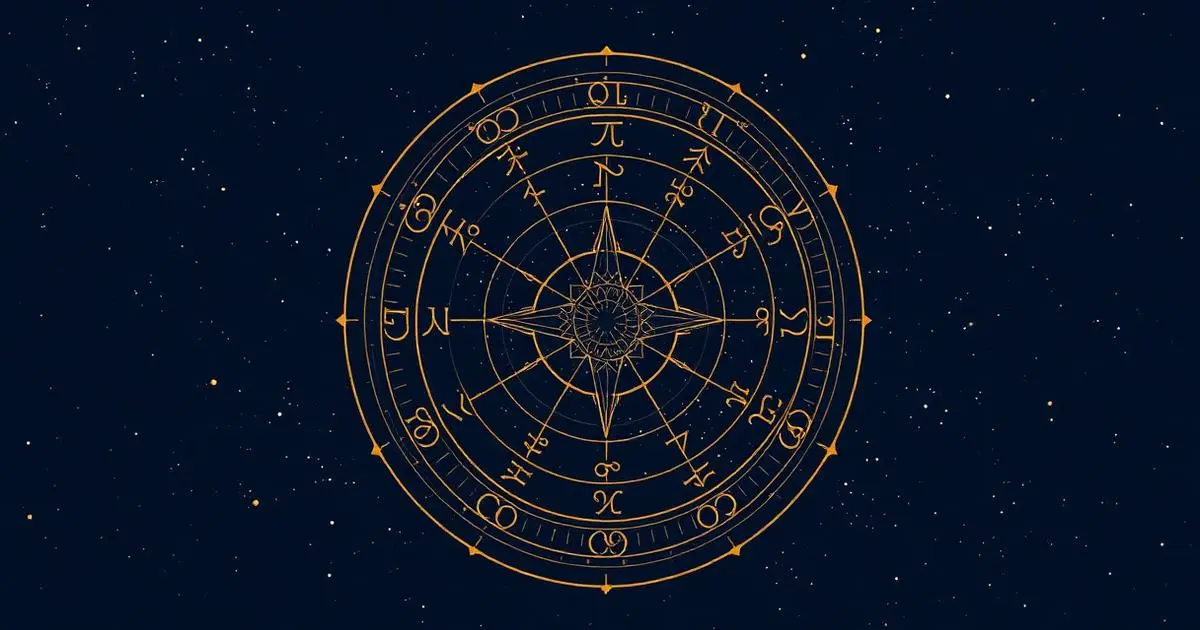
A Vedic birth chart (Kundli) is a 360-degree circle divided into 12 equal sections called Rashis (signs). These signs are the same zodiac names you know, but they are superimposed over a fixed stellar background. The chart is a snapshot of the sky, and its complexity comes from the interaction of three main components: the Grahas, the Nakshatras, and the Houses.
The Grahas (Planets) and the Nakshatras (Lunar Mansions)
Vedic astrology uses nine primary celestial bodies, or Grahas: the Sun, Moon, Mars, Mercury, Jupiter, Venus, Saturn, and the two lunar nodes, Rahu and Ketu. Each Graha is a cosmic function. The Sun is your soul, the Moon is your mind, Mercury is your intellect, Venus is your relationships, and Saturn is your discipline and karma. The nodes, Rahu and Ketu, are the shadow planets representing your obsessions and your past-life wisdom, respectively. These nine planets do not just sit in signs; they occupy specific Nakshatras (lunar mansions). The sky is divided into 27 Nakshatras, each spanning 13 degrees and 20 minutes. Think of a Rashis as a country and a Nakshatra as the city within that country. The Nakshatra refines the planetary expression, dictating not just what you do, but how you do it. For instance, a Moon in the fiery, impulsive Ashwini Nakshatra is very different from a Moon in the gentle, artistic Bharani, even though both are in the sign of Aries.
The Twelve Houses and the Ascendant
The chart is further divided into 12 Houses (Bhava), which are fixed segments of your life. The first house is your physical self and appearance, the second is wealth and speech, the seventh is marriage and partnerships, and the tenth is your career and public standing. The sign rising on the eastern horizon at birth becomes your Ascendant (Lagna), and this sign is placed in the first house. The Ascendant is the most personal point in the chart-it is the gateway through which all planetary influences filter. If your Sun is in the 10th house, you are likely to be a leader in your career; if your Moon is in the 7th house, your emotional well-being is deeply tied to your partner.
How Do the Dashas and Divisional Charts Work?
Your natal chart is a static photo, but life is a movie. Vedic astrology uses a unique predictive system called Dasha to understand the timing of events. The most widely used is the Vimshottari Dasha system, which is based on the position of the Moon at birth. It assigns a specific number of years to each planet's rule (e.g., Jupiter for 16 years, Saturn for 19 years), creating a 120-year cycle. When you are in a Jupiter dasha, you will experience Jupiter-themed events-expansion, wisdom, and good fortune. When Saturn rules, you may face delays, hard work, and lessons in discipline. The Dasha system is like a clock that tells you when the seeds of your karma will ripen.
Additionally, Vedic astrology employs divisional charts (Vargas) to zoom into specific areas. The Navamsa (D-9) chart, for example, is a harmonic chart that reveals the deeper state of your marriage and your inner spiritual connection. The Dasamsa (D-10) chart is analyzed for career matters. These charts are made by dividing each sign into fractional parts. They are like looking at a single photo under a microscope-you see the texture and hidden details that the main chart misses.
What Can a Vedic Astrology Reading Actually Tell You?
It is crucial to understand the scope of a Vedic reading. A genuine astrologer will not tell you that you will win a lottery on a specific Tuesday. Instead, a reading reveals your inherent strengths, your karmic patterns, and the favorable and challenging periods in your life. It can show you why you are drawn to certain careers, why you have a particular relationship dynamic, and when it is best to start a business or get married. It offers a framework for self-awareness rather than a rigid destiny. The chart is a map of your tendencies; you still hold the steering wheel. Use Jyotish to understand the cosmic weather so you can wear the right clothes, not to predict whether it will rain every Tuesday. When used wisely, Vedic astrology is a profound tool for personal growth, helping you align your actions with the cosmic rhythms and ultimately, your own dharma.
Related reading
- AI Astrology, Instant Predictions From Your Birth Chart
- Vedic Astrology AI, Ask Your Chart Anything
- Astrology AI: How AI Reads Your Birth Chart
- AI Astrologer, Your Personal Jyotish, Available Instantly
- What Is Retrograde in Vedic Astrology? (Vakri Planets Explained)
- RetroGrade AI, The AI Vedic Astrology Platform
Related reading
- AI Astrologer, Your Personal Jyotish, Available Instantly
- AI Astrology, Instant Predictions From Your Birth Chart
- Astrology AI: How AI Reads Your Birth Chart
- RetroGrade AI, The AI Vedic Astrology Platform
- Vedic Astrology AI, Ask Your Chart Anything
- What Is Retrograde in Vedic Astrology? (Vakri Planets Explained)