

How Does an AI Read a Birth Chart?
The short answer is that an AI reads a birth chart the same way a classical astrologer does, just with faster math and a more systematic memory. It starts with your date, time, and
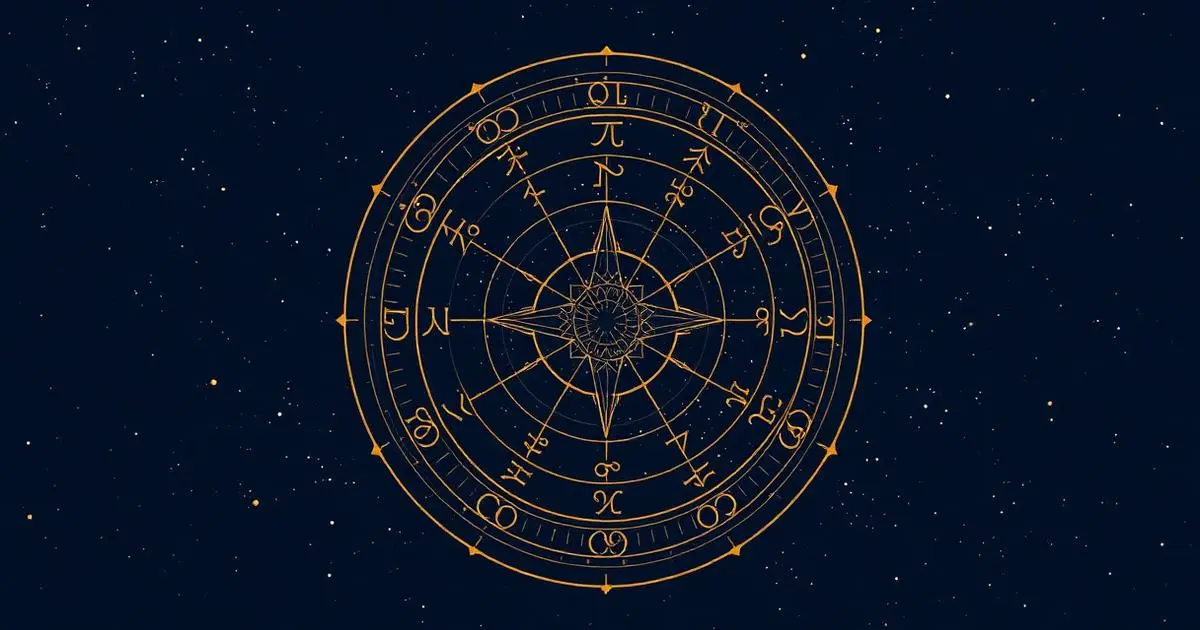
The short answer is that an AI reads a birth chart the same way a classical astrologer does, just with faster math and a more systematic memory. It starts with your date, time, and place of birth, converts that into a precise map of the sky using an ephemeris, and then applies a strict set of Vedic rules to interpret that map. The difference is that the AI can calculate every planetary position, house cusp, and strength score in milliseconds, and then cross-reference them against thousands of classical principles without ever getting tired. But the logic underneath is entirely traditional.
How does raw birth data become a chart?
The first step is purely astronomical. Your birth date and time are converted into a Julian Day Number, and your birthplace coordinates are used to adjust for time zone and longitude. The AI then queries an ephemeris-a table of celestial positions-to find exactly where the Sun, Moon, and all eight planets were at that precise moment, down to the arc-minute. This gives the sidereal positions, which are then adjusted for the ayanamsa (the difference between the tropical and sidereal zodiacs) to get the Vedic longitudes.
From these longitudes, the AI calculates the ascendant (Lagna)-the sign rising on the eastern horizon at birth. This is the single most important point in the chart because it sets the entire house framework. The AI then computes the cusps of all twelve houses, which are not equal divisions but are calculated using a specific house system (typically Sripati or Whole Sign in most Vedic software). Once the planets and cusps are in place, the AI has a complete birth chart-a static snapshot of the sky that will never change.
What happens after the basic chart is drawn?
Here is where a human astrologer would start drawing additional charts on paper, and where the AI starts running its algorithms. The first layer is the divisional charts, or vargas. These are harmonic charts that zoom into specific areas of life-the Navamsa (D-9) for marriage and dharma, the Dasamsa (D-10) for career, the Chaturthamsha (D-4) for property, and so on. The AI calculates all sixteen divisional charts simultaneously, because each one modifies the interpretation of the birth chart. A planet that looks powerful in the Rasi (birth chart) might be weak in the Navamsa, and the AI needs to know that before it can say anything meaningful.
The second layer is the identification of karakas-the significators. Each planet has a natural karaka role (Mars for siblings, Jupiter for children, Venus for marriage), but the AI also calculates the Chara Karakas, which are the planets with the highest degrees in specific signs. These become the functional significators for the individual. For example, if Jupiter is the Atmakaraka (the planet with the highest degree), the AI knows that spiritual growth and wisdom will be a central theme of the person's life.
Why does the same chart answer different questions differently?
This is the most important question, and the answer lies in the bhava (house) logic. The birth chart is not a single story-it is a twelve-room house, and each question opens a different door. If you ask about career, the AI looks at the 10th house (profession), the 10th lord, the Dasamsa (D-10) chart, and the karakas for work (Saturn, Mercury, and the Sun). If you ask about marriage, it completely ignores the 10th house and instead examines the 7th house, the 7th lord, the Navamsa chart, and Venus and Jupiter as natural karakas.
So the AI does not read the chart as a single block of text. Instead, it runs a question-specific filter. For a career query, it will rank the planets by their influence on the 10th house using a combination of ownership, placement, conjunction, aspect, and strength in divisional charts. For a marriage query, it will run the same process, but on the 7th house and its related factors. This is why the same chart can produce different predictions for different areas of life-the underlying data is the same, but the rules of interpretation change with the question.
How does the AI decide if a planet is strong or weak?
Strength (bala) is not a vague feeling-it is a set of quantifiable scores. The AI calculates six classical strengths: Sthana Bala (positional strength), Dig Bala (directional strength), Kala Bala (temporal strength), Cheshta Bala (motional strength), Naisargika Bala (natural strength), and Drik Bala (aspectual strength). Each planet gets a numerical score out of 60, and the AI sums these to determine whether a planet is strong enough to deliver its results.
It also checks for afflictions. A planet in retrograde motion is treated differently-it is considered powerful but erratic. A planet in debilitation (in a sign where it is weak) is flagged for careful handling. The AI also looks at combustion (when a planet is too close to the Sun) and ashtakavarga (a special scoring system based on the contributions of all planets to each house). Only after all these checks does the AI decide whether a promised result will actually manifest, and whether it will happen easily or with obstacles.
What about timing?
Once the static chart is fully understood, the AI moves to the dynamic layer: timing. The primary tool is the Vimshottari Dasha system, which divides a 120-year cycle among the nine planets. The AI calculates your current dasha period and sub-period (bhukti) to the exact day. It then overlays the current transits of the slower planets (Saturn, Jupiter, and Rahu) onto your birth chart. If a significant dasha is running, and a benefic transit is aspecting a key house, the AI knows that the time is ripe for that area of life to activate. If the dasha is malefic and the transits are challenging, it will temper its prediction and suggest caution.
How does the AI write the final answer?
After all the calculations are done, the AI does not just dump numbers. It translates the results into plain language. It will say things like "Your 7th lord is in the 4th house with Jupiter, which suggests emotional fulfillment in marriage, but Saturn's aspect creates a delay that you will feel in your early 30s." It will avoid jargon unless you want it, and it will always tie the abstract planetary positions back to concrete life events-career changes, marriage timing, financial gains, health concerns-based on the house and karaka logic described above.
The technology is new, but the grammar is ancient. When you ask an AI to read your chart, you are not getting a robotic interpretation-you are getting a precise, rule-based application of the same Jyotisha principles that have been used for centuries, just computed at the speed of light.
Related reading
- AI Astrology, Instant Predictions From Your Birth Chart
- Vedic Astrology AI, Ask Your Chart Anything
- Astrology AI: How AI Reads Your Birth Chart
- AI Astrologer, Your Personal Jyotish, Available Instantly
- What Is Retrograde in Vedic Astrology? (Vakri Planets Explained)
- RetroGrade AI, The AI Vedic Astrology Platform
Related reading
- AI Astrologer, Your Personal Jyotish, Available Instantly
- AI Astrology, Instant Predictions From Your Birth Chart
- Astrology AI: How AI Reads Your Birth Chart
- RetroGrade AI, The AI Vedic Astrology Platform
- Vedic Astrology AI, Ask Your Chart Anything
- What Is Retrograde in Vedic Astrology? (Vakri Planets Explained)